
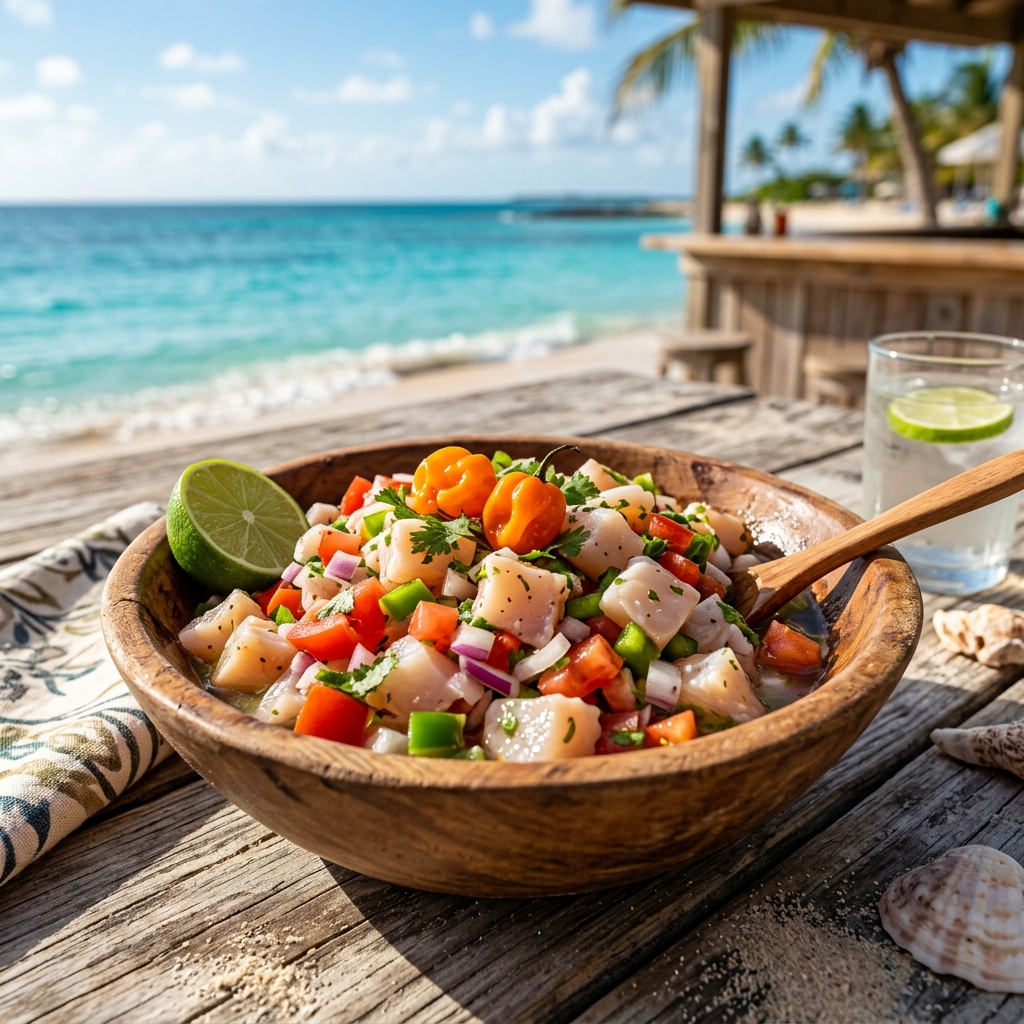
The queen conch — Aliger gigas, if you want the Latin — is a large marine gastropod with a spiral pink-and-cream shell that you've probably seen as a decorative object. In the Bahamas, it's something else entirely: the most important ingredient in the national cuisine, a symbol of cultural identity, and the subject of more opinions per square mile than almost any other food in the Caribbean.
If you're visiting Nassau and you haven't thought much about conch before, here's what you need to know.
What Conch Is
Conch is a large sea snail harvested from the shallow seagrass beds of the Bahamian archipelago. The meat is firm, slightly chewy, and mild in flavour — closer to calamari than clam in texture, but with its own distinctive taste that's difficult to compare to anything else precisely because it's so specific to this region.
The Bahamas is one of the few places in the Caribbean where conch is still harvested in significant quantities from wild populations, and Bahamians eat it in quantities and with a frequency that reflects its centrality to the cuisine. It's not a special occasion food — it's what you get at a roadside stand on a Tuesday afternoon.
The Four Main Preparations
Conch salad is the preparation most worth experiencing and the one most specific to the Bahamas. Raw conch, chopped fine, mixed with diced tomato, onion, sweet pepper, hot pepper, lime juice, orange juice, and sometimes cucumber. It's prepared to order — the cook works in front of you, and the whole process takes about four minutes. The result is fresh, bright, acidic, and deeply good. This is the correct first conch experience.
Cracked conch is conch that has been pounded to tenderize it, battered, and deep-fried. The texture is closer to calamari but with more substance. Served with peas and rice and coleslaw at most Bahamian restaurants. Reliable comfort food.
Conch fritters are chopped conch incorporated into a spiced batter and fried in balls roughly the size of a golf ball. Served with a dipping sauce — usually a seasoned mayo or a pepper sauce. The most widely available conch preparation at Nassau's tourist-facing restaurants, and when made well, genuinely enjoyable.
Conch chowder is a heartier preparation — conch in a tomato or cream-based soup with vegetables. More commonly eaten by locals at home than in restaurants. Worth ordering if it appears on a menu, as it tends to be made with more care than the fried preparations.
Where to Eat It
The best conch salad in Nassau is at Arawak Cay Fish Fry — specifically the shacks that prepare it fresh in front of you. Do not accept pre-made conch salad sitting in a bowl. It should be prepared to order.
For conch fritters, The Grill Hut near the cruise port does them consistently well. Blue Marlin Restaurant offers a more elevated version of the same as a starter. Both are worth ordering.
For cracked conch in its proper form — the full plate with peas and rice — Arawak Cay again, or any of the small Bahamian restaurants outside the tourist core of Nassau. Ask your taxi driver where they'd eat cracked conch. This is always the right question to ask in any city.
A Note on Sustainability
Queen conch populations in the Caribbean have declined significantly over the past few decades due to overharvesting. The Bahamas has implemented size limits and harvest regulations to protect the population — Bahamian conch fishery is more sustainable than in many neighbouring countries, but the situation is worth being aware of.
Ordering conch at reputable Bahamian restaurants is supporting a regulated local fishery. Buying conch shells at the Straw Market is a different calculation — most of those shells come from countries without effective harvest regulations. Worth knowing.
How to Pronounce It
It's "conk." Not "conch" with the hard ch. You will immediately identify yourself as a first-time Nassau visitor if you say it the other way, and Bahamians will be too polite to correct you, which is somehow worse. It's "conk." Now you know.
