
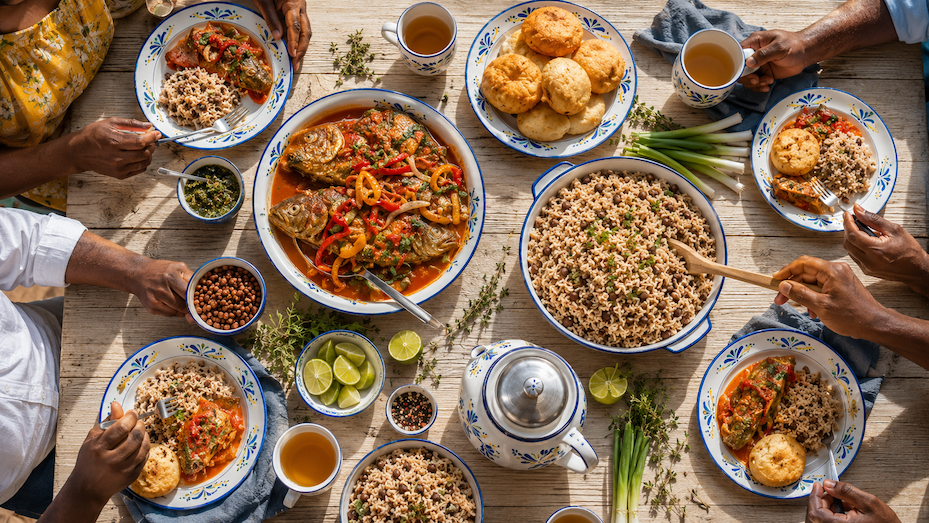
Fewer people stop to ask where the food on the table actually came from during Emancipation Day, even though several Bahamian staples carry a more direct link to the history being commemorated than the celebrations do. Most visitors researching things to do in bahamas during the first week of August focus on the parades, the Junkanoo rush outs, and the public holiday itself, and miss this part of the story completely.
Peas and Rice, the Backbone of the Table
Peas and rice traces its roots to West African cooking traditions, carried to the Bahamas by enslaved Africans and later adapted with local pigeon peas, thyme, and whatever protein was available, according to the Grand Bahama Museum's Food Ways exhibit. It remains the dish most associated with what to do in nassau on any given Sunday, let alone during a holiday built around freedom.
For anyone building a nassau travel guide around local food, this is the one dish that appears on nearly every table, from roadside stands to formal dinners, and it pairs naturally with a proper conch salad, covered in more depth in our Best Conch Salad in Nassau guide.
The Short Water Method
Long before modern stoves, Bahamian cooks developed what is known as the short water method, a technique built around using minimal water to stretch limited resources during periods of real scarcity, a detail also confirmed on the same Grand Bahama Museum exhibit above. It shaped how stews, peas, and rice were cooked for generations and still influences Bahamian kitchens today. This detail rarely appears in any nassau attractions guide, even though it explains more about daily survival during slavery than most historical plaques do.
Stew Fish and a Later Wave of Influence
Stew fish carries the clearest West African cooking technique of the group, brought over during the transatlantic slave trade and later reshaped by Haitian influence following waves of migration to the islands. It is closely tied to the neighborhood covered in our Over-the-Hill neighborhood guide, where freed Africans built much of Bahamian food culture after emancipation.
Locals often eat it with johnny cake for breakfast, a full spread detailed further in our Bahamian Breakfast guide. It remains one of the best things to do in nassau for breakfast, if a plate of stew fish counts as an activity.
Bush Tea and Inherited Knowledge
Bush tea carries a different kind of history. Enslaved Africans brought detailed knowledge of medicinal plants with them, and that knowledge was adapted to Bahamian flora and passed down primarily through women in families, according to the Grand Bahama Museum's Bush Medicine exhibit. What looks like a simple herbal drink is actually generations of retained practical medicine, still made in homes across the islands. Anyone researching nassau excursions built around local culture should know that a proper bush tea, not a souvenir shop version, is harder to find than it sounds.
Why This Matters Beyond the Plate
None of these dishes were created for tourism, and that is exactly what makes them worth understanding before Emancipation Day turns into just another long weekend. For travelers researching things to do near nassau cruise port during the holiday, sampling a plate of stew fish or a cup of bush tea offers a more direct connection to the day's actual meaning than a parade photo does.
Any bahamas travel guide worth reading should mention this food alongside the history, not as an afterthought.
For visitors focused on nassau tourism during the first week of August, this is a reminder that meaningful travel experiences are not always the loudest ones. Beach and boat tour lists rarely mention a plate of peas and rice made with the short water method, even though it carries more of the island's actual history than most excursions do.
FAQ
What is the short water method in Bahamian cooking?
The short water method is a traditional cooking technique that uses minimal water to stretch limited resources, developed during a period of real scarcity in the Bahamas.
Where did peas and rice originate in Bahamian cuisine?
Peas and rice traces back to West African cooking traditions brought by enslaved Africans, later adapted with local pigeon peas and available ingredients.
Is stew fish a traditional Bahamian breakfast?
Yes, stew fish is commonly eaten with johnny cake for breakfast and carries roots in both West African and later Haitian culinary traditions.
What is Bahamian bush tea made from?
Bush tea is made from local herbs and plants, using medicinal knowledge that enslaved Africans carried with them and adapted to Bahamian flora over generations.
