
Nassau is typically seen from the waterfront. Bay Street, the colonial buildings, the cruise pier, the resorts on Paradise Island — that is the city most visitors experience. The Nassau that built all of it is on the other side of a limestone ridge, a ten-minute walk south of downtown, in the neighborhood known as Over-the-Hill. To reach it you go up and over New Providence's central ridge and down into the valley on the other side. It is the oldest Black community in the country, the neighborhood where Bahamian culture took the shape it still holds today, and one of the most overlooked places in the Caribbean.
How Over-the-Hill Was Built
The origin of Over-the-Hill is direct and unambiguous. Following the arrival of Loyalists from the American colonies in 1783, colonial law required that people of colour be domiciled beyond Nassau's city limits. Land was set aside on the far side of the ridge, and the first settlements began to form. After full emancipation in 1838, freed Africans established Grant's Town and Bain Town — the two communities that remain the heart of the area today. Grant's Town developed as a government-sponsored settlement for African recaptives brought to the Bahamas after the British suppression of the slave trade, and it expanded to absorb the neighborhoods that surrounded it.
The Over-the-Hill Community Development Foundation describes the district as the hub of post-slavery life for Africans in New Providence and the core of their educational and cultural awakening as Black Bahamians. The seeds of Bahamian independence were sown here. Many of the country's most prominent figures were born and raised within these streets.
What the Neighborhood Holds
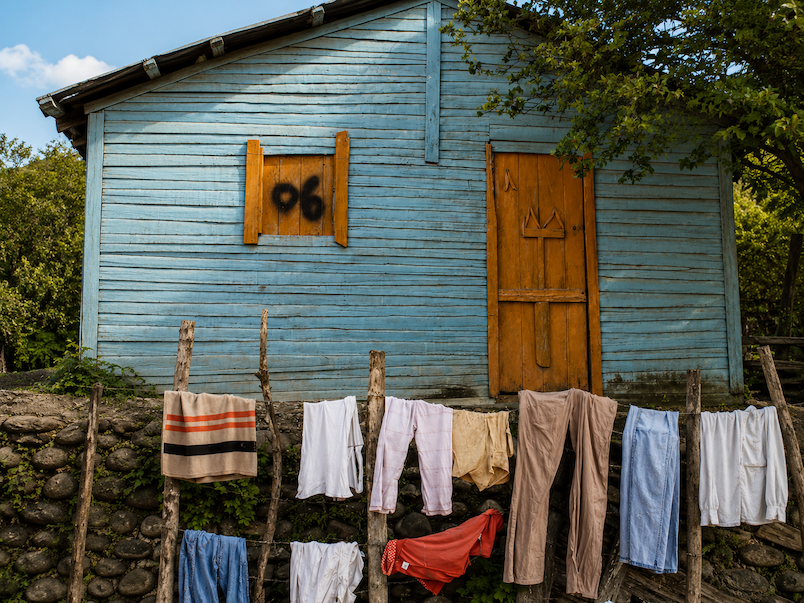
Over-the-Hill is not a museum neighborhood. It is a living, working residential community where the most visible buildings are the churches — dozens of them, in every configuration, on nearly every block. On Sunday mornings, the sound coming from their open doors fills the streets with the full range of Bahamian gospel and hymn. The cotton trees that once served as community gathering points under which decisions were made and culture was transmitted still stand in several locations across the area, large enough to shade entire intersections.
The Music That Came Out of Here
Goombay, Junkanoo, and rake and scrape — the three forms of music most closely associated with Bahamian identity — all have roots in Over-the-Hill. Rake and scrape, the oldest of the three, is built from a carpenter's saw scraped with a knife, a goatskin drum stretched over a wooden barrel, and an accordion. The combination produces a sound unlike anything else in the Caribbean, and it comes directly from the improvised instruments of people who made music from what they had. Goldie's Conch House, one of the neighborhood's most enduring food addresses, regularly hosts rake and scrape artists alongside a kitchen that serves the kind of Bahamian cooking the neighborhood is known for. For Junkanoo's own story, the island-life guide covers the full context of how the festival grew from these same streets into something the entire country participates in.
Coming to Over-the-Hill
The neighborhood is a short taxi ride or a walkable distance from downtown Nassau — it sits just south of Shirley Street, which runs parallel to Bay Street and marks the edge of the historic center. It is not a packaged experience and there is no visitor itinerary. The value is in the texture of the place: the architecture of the old wooden homes, the sound of the churches, the markets on weekend mornings. For anyone serious about understanding the full history of Nassau beyond what the colonial buildings downtown communicate, Over-the-Hill is where that history becomes tangible
