
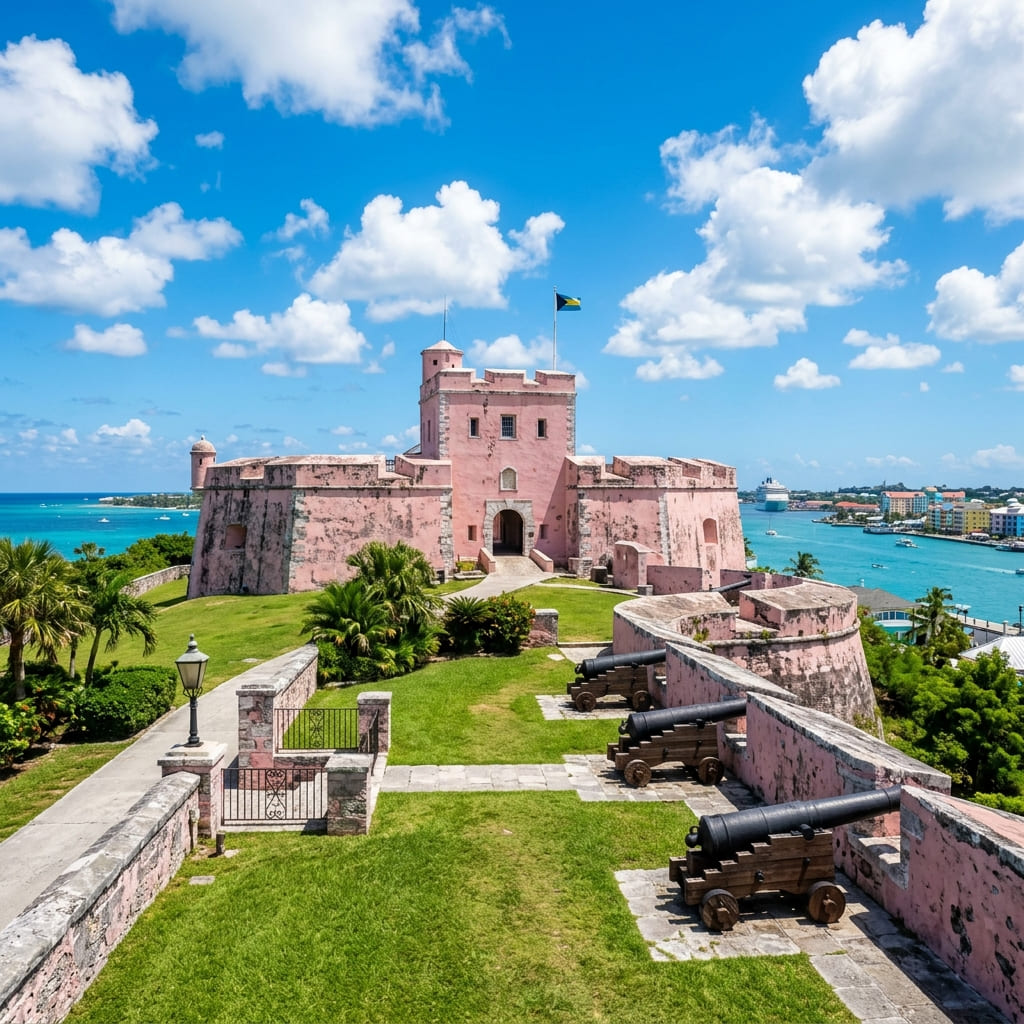
Nassau is a city that looks like a pleasant Caribbean port town and is, on closer examination, the product of a genuinely unusual history. Pirates, loyalists, bootleggers, and Cold War banking all left marks on the city's architecture, culture, and economy. Here's the version that will make your walk through downtown Nassau more interesting.
The Beginning: Lucayan People and Spanish Arrival
New Providence was inhabited by the Lucayan people — a branch of the Taíno — for centuries before European contact. Christopher Columbus made landfall somewhere in the Bahamas in 1492 (the specific island is disputed), and Spanish colonisation followed rapidly. The Lucayan population of the Bahamas was almost entirely enslaved and transported to Hispaniola within decades of contact — one of the more rapid and complete demographic eliminations in the early colonial record.
The Spanish had little interest in the Bahamas beyond its people — the islands had no gold and the shallow, reef-strewn waters were navigational hazards rather than assets. New Providence was largely depopulated and ignored for the better part of a century after the Lucayan displacement.
The Pirate Republic
In the early 18th century, Nassau became something extraordinary: effectively a self-governing pirate republic. At its peak, the harbour housed more than 1,000 pirates operating under the loose authority of figures like Benjamin Hornigold, Charles Vane, and most famously, the pirate "Blackbeard" — Edward Teach. The Republic of Pirates, as it's sometimes called, was a genuinely radical social experiment: women served as crew, crew members voted on decisions, and the hierarchies of the legitimate world were deliberately inverted.
The British Crown, finding this arrangement inconvenient, sent Woodes Rogers as the first Royal Governor in 1718 with a mandate to suppress piracy. Rogers offered pirates a royal pardon; those who refused were hanged. He succeeded, but the pirate period left Nassau a legacy that persists in the city's self-image — the motto on the Bahamian coat of arms, "Expulsis Piratis Restituta Commercia" (Pirates expelled, commerce restored), is a direct response to the Rogers era.
Loyalists and Slavery
After the American Revolution, thousands of British loyalists relocated to the Bahamas rather than remain in the newly independent United States. Many brought enslaved people with them, and the plantation economy they attempted to establish in the Bahamas — primarily cotton — ultimately failed due to the poor soil of the islands.
The enslaved population significantly outnumbered the white population of Nassau by the early 19th century. When Britain abolished slavery in 1834, the Bahamas transitioned to a free labour economy, but the social and economic structures of the colonial period shaped Nassau's demographics and class hierarchies in ways that remain visible today.
Bootlegging and Prohibition
The Volstead Act of 1919, which implemented Prohibition in the United States, created one of the most lucrative business opportunities Nassau had ever seen. The Bahamas was a short boat trip from Florida, alcohol was legal in British territory, and Nassau's harbour became a major transit point for rum and whisky heading to the American market.
The Prohibition era brought significant wealth to Nassau — the city's infrastructure improved, the tourist trade expanded, and the international connections that would later make Nassau a banking centre were established during this period. The rum-running routes that operated in the 1920s and early 1930s are, in a sense, the ancestors of modern Nassau's financial services industry.
Independence and the Modern Bahamas
The Bahamas gained independence from Britain on July 10, 1973 — a peaceful transition negotiated under Lynden Pindling, the country's first Prime Minister and a figure of enormous historical significance in Bahamian national identity. The post-independence period saw significant investment in tourism infrastructure and the development of Nassau as an offshore financial centre.
The Bahamas today is one of the more prosperous nations in the Caribbean — GDP per capita is among the highest in the region — but with significant inequality, economic dependence on tourism, and the ongoing challenge of developing an economy that works for all Bahamians rather than primarily the financial and hospitality sectors.
What to Look For on Your Nassau Walk
- Fort Fincastle (1793) — Built in the shape of a paddle steamer, named after Viscount Fincastle. Now houses a water tower and lookout.
- Fort Charlotte (1788) — The largest fort in the Bahamas, built as a response to American and Spanish threats. Never fired a shot in anger.
- Government House — The pink colonial mansion on Mount Fitzwilliam is the official residence of the Governor-General, the King's representative in the Bahamas.
- Parliament Square — The House of Assembly (1815) and Supreme Court frame a statue of Queen Victoria. A functioning Caribbean parliamentary democracy that has operated continuously since the 1720s.
- The Queen's Staircase — 66 limestone steps carved by enslaved Bahamians between 1793 and 1794, each step representing a year of King George III's reign. A physical record of an era that shaped modern Nassau.
Nassau's history is more interesting than its status as a cruise port suggests. The buildings are old enough to have seen pirates, loyalists, bootleggers, and independence movements. Walking through downtown with that context changes what you're looking at.
